
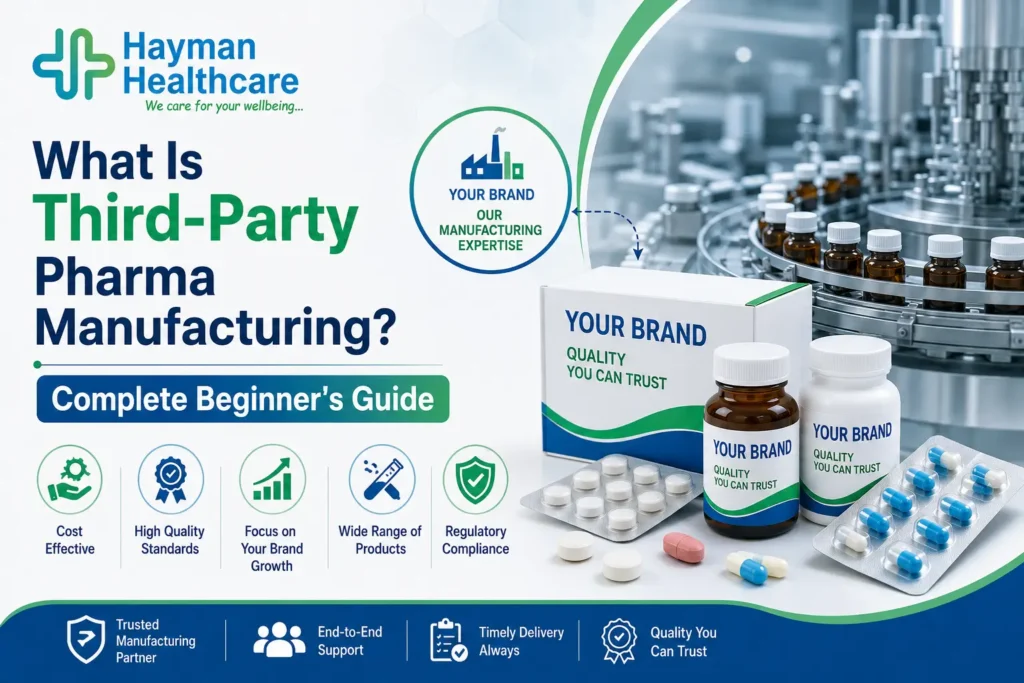
If you are planning to start a pharmaceutical business but do not want to invest heavily to set up your own manufacturing plant. You have come across the term “third-party pharma manufacturing.” It is one of the most common ways new and established pharma companies get their products made without owning a single machine.In this guide, we will kind of walk you through what third-party pharma manufacturing really means, how it works in real life, and what you should know before you pick a manufacturing partner, and so on.
What is Third-Party Pharma Manufacturing?
Third-party pharma manufacturing is also known as contract manufacturing. It is a setup where one pharma company makes the medicines for another company, under the brand owner’s name and label. The brand owner takes care of the branding, promotion, and distribution, while the manufacturer handles production, quality checking, and compliance with regulatory standards. In other words, the roles split, but the end result is supposed to match the same expectations and obligations.
This model saves your money because building a pharmaceutical manufacturing unit is expensive and time-consuming. It requires the licenses, specialized machinery, trained staff, and ongoing compliance with the WHO-GMP and other regulatory norms. Third-party manufacturing allows a business to skip all of that and focus purely on growing its brand and market presence.
How Does Third Party Pharma Manufacturing Work?
Third-party pharma manufacturing works in a simple way once you get the idea. Let’s discuss it step by step:
Choosing a Manufacturer: The brand owner basically chooses the manufacturing company by looking at its product range, the certificates it holds, production capacity, and also the general reputation it has in the market.
Product and Formulation Selection: The next step is for the brand owner to choose which formulations they want to manufacture. It includes tablets, capsules, syrups, injectables, ointments, or whatever dosage form the manufacturer can handle.
Agreement and Terms: After that, both sides sign a manufacturing agreement, usually covering the pricing structure, minimum order quantities, packaging specifications, delivery timeframes, and the quality expectations.
Production and Quality Checks: The manufacturer then sources the raw materials, produces the batch, and runs it through quality control checks so it aligns with required pharma standards before anything gets packed.
Branding and Packaging: After the batch is approved, it gets packed using the brand owner’s name, logo, and packaging design. In other words, your product is ready for distribution in the market under that brand identity.
Delivery to the Brand Owner: Finally, once everything is approved, the manufactured stock is shipped to the brand owner. Then you can move it into distribution, sales, and usage across their PCD pharma franchise network.
Third-Party Manufacturing vs Setting Up Own Manufacturing Unit
- Own Manufacturing Unit
- It requires heavy capital investment in land, machinery, and licenses.
- Long setup time before production is required
- Ongoing responsibility for the compliance and the staff
- Third-Party Manufacturing
- Minimal upfront investment.
- Fast launches since the infrastructure already exists
- Manufacturers handle the compliance and quality control
- The brand owner can focus on the marketing and distribution part of the business.
For the newest entrants and the small or mid-sized pharma business. Third-party manufacturing offers a more practical starting point. You have the option to build your own infrastructure later as the business scales.
Why Choose Hayman Healthcare for Third-Party Pharma Manufacturing?
At Hayman Healthcare, we support the pharma businesses with dependable third-party manufacturing services backed by WHO-GMP-certified quality standards. Our production covers a wide range of formulations such as tablets, capsules, syrups, injectables, ointments, and cardio-diabetic ranges. Additionally, we verify our raw material sourcing, and we only pick the right material. Additionally, we follow the protocols while manufacturing the pharma products. Our company focuses on providing on-time delivery of the products so that you can cater to the increasing demand.
If you are planning to start or expand your pharma business with third-party manufacturing. Then connect with Hayman Healthcare to discuss your product requirements, timelines, and business goals.
Conclusion
Third-party pharma manufacturing offers a practical, low-investment way to enter or grow the pharmaceutical business without any need to set up your own manufacturing unit. By partnering with the right manufacturer, one with proper certificates, adequate capacity, and transparent terms. You can focus on the branding, marketing, and making good relationships with the partners.